


Indonesia is rich in high-quality products, natural resources, and local craftsmanship. However, many local businesses and MSMEs still face challenges when entering the international market.
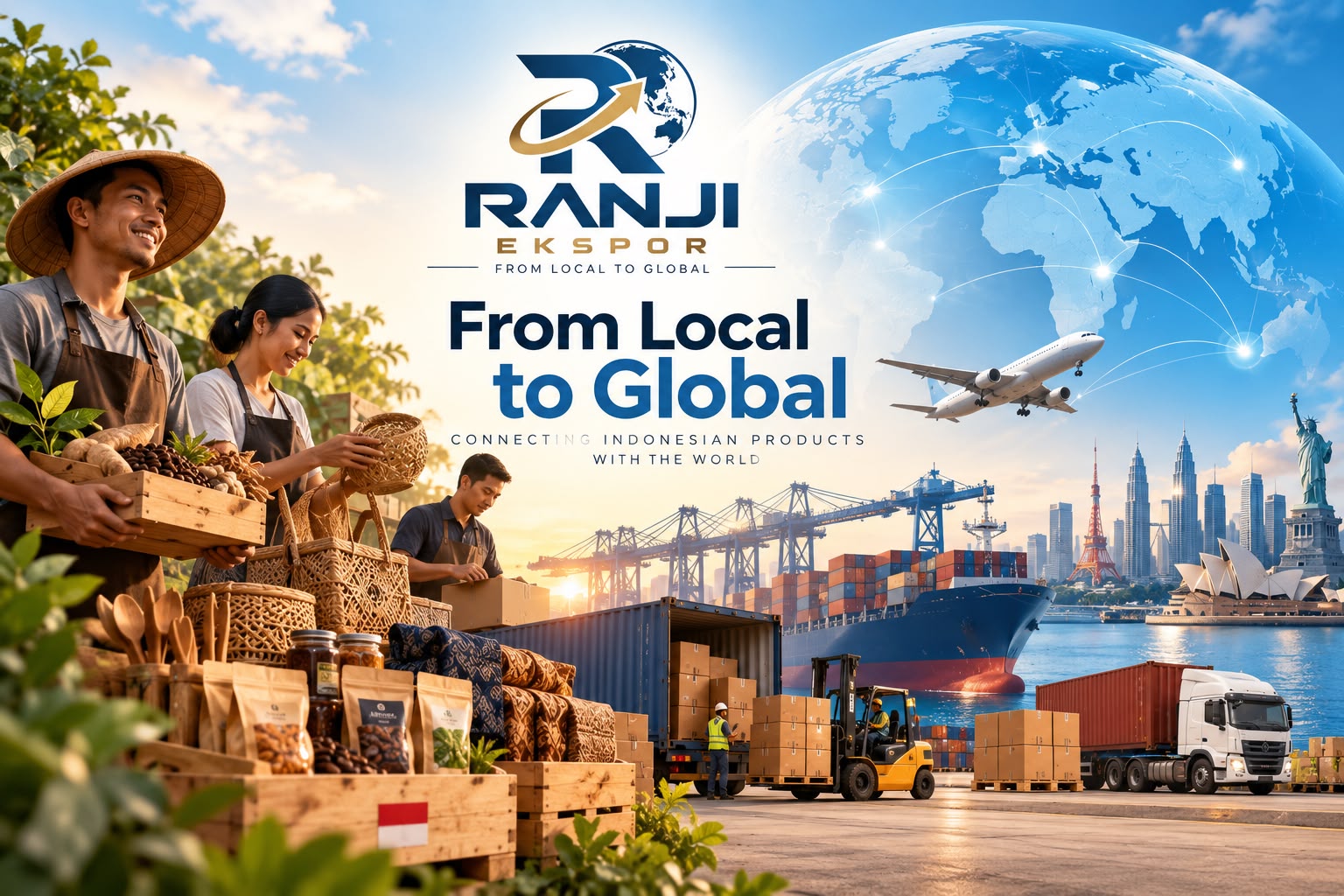
With the right export strategy, documentation, logistics, and international market access, Indonesian products have the potential to reach customers around the world.
Our Role in Export
From Local to Global
Exporting is more than simply shipping products overseas. It requires a well-planned process, from identifying international market opportunities to ensuring that products meet the requirements of the destination country.
At Ranji Project, we aim to connect Indonesian products with international buyers and create opportunities for local businesses to expand beyond the domestic market.
Connecting Indonesian Suppliers with Global Buyers
We help identify potential products and suppliers from Indonesia and connect them with international market opportunities.
Our approach focuses on understanding buyer requirements, product specifications, pricing, documentation, and shipping arrangements to create a smoother export process.
Supporting MSMEs to Go International
Many Indonesian MSMEs have competitive products but limited access to international markets.
Through export assistance and international trade networks, we aim to help local businesses take their first step toward global markets.
From Local to Global — Connecting Indonesian Products with the World.
A Structured Export Process
A successful export transaction requires careful coordination at every stage.
1. Product Preparation
Products are prepared according to buyer requirements, including specifications, quality, packaging, quantity, and supporting documents.
2. Market & Buyer Identification
Potential international buyers and target markets are identified based on product demand, market potential, and applicable import requirements.
3. Commercial Negotiation
The exporter and buyer discuss product specifications, quantity, pricing, payment terms, Incoterms, and delivery schedules.
4. Documentation & Customs
The required export documents are prepared, including commercial documents and customs declarations such as the Export Declaration (PEB).
5. Logistics & Shipment
The goods are transported to the designated port or customs area and loaded onto the appropriate means of transport.
6. Delivery to the Destination
The shipment departs for the destination country and is delivered according to the agreed international trade terms.
Why Export Indonesian Products?
High-Quality Local Products
Indonesia offers a diverse range of products with strong potential in international markets, from agricultural commodities and processed foods to handicrafts and manufactured goods.
Growing Global Demand
International buyers are increasingly looking for unique products, competitive pricing, and reliable suppliers from emerging markets.
Expanding Business Opportunities
Exporting allows Indonesian businesses to access new customers, diversify their markets, and build long-term international partnerships.
Our Vision
We believe Indonesian products deserve a place in the global marketplace.
Ranji Project is committed to building connections between Indonesian suppliers and international buyers while supporting local businesses in taking their products beyond Indonesia.
From Local to Global.
Connecting Indonesian Products with the World.


